
Getting involved with Ibba Girls Boarding School
This story starts in 2002 when I began a Master’s in Public Administration course at Warwick Business School. That’s where I first met Professor John Benington, who at that time was the head of the Institute of Governance and Public Management (IGPM). Fast forward six years ...
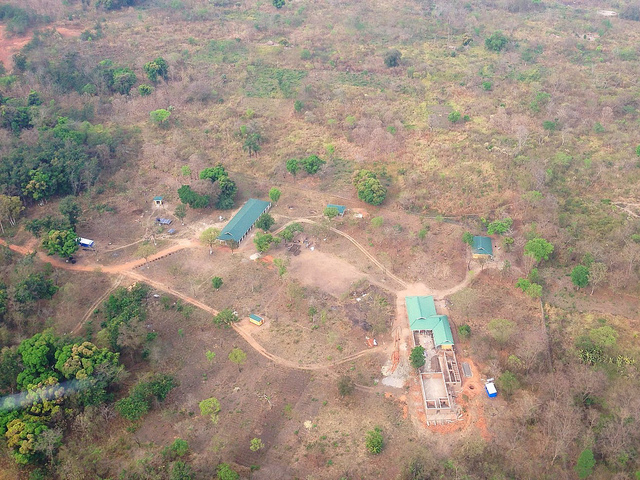
This story starts in 2002 when I began a Master’s in Public Administration course at Warwick Business School. That’s where I first met Professor John Benington, who at that time was the head of the Institute of Governance and Public Management (IGPM). Fast forward six years, long after I’d got my MPA, and John sent an email to alumni asking if anyone was interested in helping out with some work the IGPM was doing with the Ministry of Commerce in what was then, prior to independence, the appointed Government of South Sudan. (After more or less 50 years of civil war there was a peace agreement in 2005 which led to a referendum on secession and, ultimately, independence from Sudan in July 2011. South Sudan is the world’s newest country–although I still see lists of countries that do not include it).
In 2008 John had arranged three training courses for 50 civil servants from the Ministry of Commerce to be held in Juba, the capital of South Sudan. This in itself says something: running a course in Warwick Business School would have been more comfortable but only one or two civil servants would have benefited. Taking the courses to South Sudan meant that 50 people got the benefit.
The first two courses that were run were about people management and project management. One of the civil servants was Nagomoro Bridget and she shared her dream with John about building a girls school in the village of Ibba, Western Equatoria, where she grew up.
The third course was in December 2008 and focused on financial management. John’s team for this was Roy Warden from Her Majesty’s Treasury and me. We spent a week at the Juba Bridge Hotel in Juba delivering the course and I remember seeing John pointing out Bridget to me and explaining her dream.
For me, a number of things flowed from that visit to Juba. First, I had an ‘adventure’ by the White Nile (our hotel was just beside the bridge where Levison Wood was arrested whilst Walking the Nile). Second, whilst waiting for a connecting flight at Nairobi airport, John gave me the idea to write a book–a story explained in the foreword. Third, I’d done some work outside of the UK, which was one of my goals when I decided to leave local government and become an independent consultant. Fourth, John saw some potential in me to explain finance to non-financial managers which led to the invitation to teach at Warwick, on the very same MPA course I had taken. And, fifth, I became part of John’s network of supporters for building a girls school in a remote and deprived part of the world.
I don’t know exactly when John began actively fundraising for Ibba Girls School but through 2009 and 2010 he was mobilising people in his network, first informally but ultimately through a registered charity, Friends of Ibba Girls School. After a few years of fundraising work started on the school (on 73 acres of land Bridget had inherited from her father) in 2012 and the school opened with a class of 40 girls in Mach 2014. During this time I was an occasional advisor helping with some of the financial planning but I was not formally a trustee of the charity. I was also a supporter in a small way, reading the monthly newsletters and keeping in touch with progress and John’s regular trips to Ibba. (As of last week he has made 21 trips to South Sudan in 7 years.)

In April 2014 John rang me to ask me three questions. I can’t remember what the first two of them were but the third was, would I consider being the treasurer when the existing treasurer stepped down in the autumn? After years of persuading people to help with the Ibba Girls School project John is a difficult man to turn down, not that I ever though of saying No. My concern was just about limiting my time commitment because this is the sort of project that can become full time if one lets it.
My intention was to be a light touch treasurer, keeping an overview of the charity’s bank balances and giving a report to each of the quartlerly meetings. From the viewpoint of the summer of 2014 that looked achievable. Since then, at my first meeting as a trustee, I learned that Jamie, the volunteer who had been managing the school’s finances, and much else besides, had decided to return to his native Australia. This meant I would have to get involved in recruiting a replacement, something which is not easy from 3,800 miles away (which will be the subject of a separate blog post). Ultimately that resulted in me travelling to Ibba at the beginning of this month to finalise the appointment of a local man, Santino, and begin to train him. His training and support will continue over the next few months by email and Skype.
Perhaps I was kidding myself that I could be the treasurer of a charity in a light touch way. Certainly for the next few months I think it will take up one day a week of my time. I don’t mind, though, because I’ve been to the school and I’ve seen the girls in a classroom. Everyday that they are in school they are safe, they are fed and they are learning. That’s worth it.
If you want to know more about the Friends of Ibba Girls School and its work, and if you would like to make a donation, please look at the website. You can also look at a gallery of photos I took during my visit over on Flickr.
Time to practise what I teach

As someone who thinks of himself as something of an expert in public financial management, for most of the last ten years I’ve done strategic things. As a consultant I tend to work as an advisor on projects; as a lecturer I tend to talk in class about general concepts like budgeting (although I like to include stories from my real-life experience); and it is much the same when I’m writing. Next month, however, I’m going to roll my sleeves up, literally, and do some practical financial management at a girls school in South Sudan.
Ibba is a small village in Western Equatoria state, close to the Ugandan border. Ibba Girls School opened in March 2014 with a single class of 40 girls. Those girls will return for their second year in February and they will be joined by a class of 40 new girls. The school has been funded by a UK charity, the Friends of Ibba Girls School of which I am now the treasurer. (I’ll write about how I became involved with the school in a later post. It's connected to the story in the foreword of my book.)
There are lots of challenges in running a school in a country as fragile and poor as South Sudan. Nevertheless, the school got through its first year and can point to evidence from tests given to the girls at the start and end of the year to show how valuable it is. In 2014, a volunteer couple from Australia took on the roles of co-head of the school and business manager. They did some brilliant work despite being outside their comfort zone but they returned to Australia last November. We have had difficulty in recruiting someone to take on the duties of business manager that we could afford. Qualified and experienced finance managers in South Sudan can get good jobs with aid agencies, etc and therefore they ask for salaries in excess of $2,000 a month, beyond both our budget and the amount we pay to the school’s headteacher.
Anyway, to cut a long story short, we think we might have someone who can take up the job but probably not until March. Meanwhile the staff need to be paid for January and February and the school needs to buy food, etc for the girls (it is a residential school). And, that’s why I’m going to Ibba at the beginning of February.
Why am I telling you all of this on a blog about managing public money? Because I thought it would be interesting to write some blog posts over the coming weeks about the experience. It’s all well and good to sit in England and write/talk about good financial governance but how do those things translate to a small African school?
Let me give you an example. Friends of Ibba Girls School can only send money to the school through the international banking system in US dollars so the school has to exchange the dollars for South Sudanese pounds in order to buy food and whatever else is needed. The exchange rate in a bank might be SSP4.00 to the dollar, but the illegal, bush exchange rate could be SSP5.00 to the dollar. Good governance would say that the official rate should be used so that there is paperwork, receipts and no risk of prosecution, but the “cost” of sticking to that principle is a 20% reduction in spending power. What is the answer?
There is a second reason for writing this blog post (and the ones that follow). I want to raise the profile of Friends of Ibba Girls School and the work it does. If you would like to know more please check out their website (it includes a really good, short film shot at the school last summer) and if you like what we’re doing please consider making a donation to us. You can donate here. Or if you are in the UK you could text PENCIL to 70660 to donate £5 (just like Stephen Fry and Harry Enfield did).

Online certificate in IPSAS launched
 I’m a CIPFA accountant but over the last few months I’ve been working with a different accounting institute, the Association of Chartered Certified Accountants (ACCA) on the development of an online course. The course is their Certificate in International Public Sector Accounting Standards (IPSAS). The course opened today for registrations.
Those who don’t know much about the accounting profession might not be entirely surprised to learn that accountants have lots of rules and regulations to follow. Unfortunately (or perhaps fortunately, depending on your point of view) the rules and regulations are not the same for every organisation in the world. There are some differences between countries in the accounting standards used by private sector companies although many countries have adopted the International Financial Reporting Standards (IFRS).
IFRS nearly fit, but don’t quite fit, public sector bodies. Public bodies have some significant differences in their finances, such as having tax-raising powers, and investing in assets like roads and parks and schools and public hospitals that have no promise of earning them income in the future but will cost them money to operate and maintain. Hence, over the last 15 years or so, the accounting profession, in the guise of the International Public Sector Accounting Standards Board (IPSASB) has been developing and publishing IPSASs. There are now 32 of them (plus a special one for public bodies that use cash accounting rather than the more sophisticated accruals basis of accounting). The full set is available for free in PDF format from the IPSASB (use this link) but be warned, there are 2,000 pages over two volumes, and a total download of over 8MB.
There are some countries (including Austria, Cambodia, Kenya, Spain,South Africa, and Vietnam) and organisations (including the European Commission, NATO and the United Nations family of organisations) that have adopted IPSASs as they are. In some other countries, like the UK, public bodies follow the IFRS as far as they are able, and look to IPSAS for guidance on how to deal with transactions that IFRS doesn’t deal with. And there are other countries who have developed their own standards for their public bodies, often using the IFRS and IPSAS as a basis.
Anyway, my point is that IPSASs are important to public sector accountants, either because they are used directly, or because they underpin the accounting standards that they follow, and the course by the ACCA is intended to address the need for accountants around the world to know what IPSASs are, and at least understand the important principles. If you are interested in the course you can read more about its contents and find out how to register for it at the ACCA’s website.
Financial Management and Accounting in the Public Sector 2nd edition
 The second edition of Financial Management and Accounting in the Public Sector was published by Routledge last week.
I’m really proud that Routledge felt the book was successful enough to justify a new edition. On accepting the commission I had not realised quite how much work would be involved but I am pleased with the results. As well as updating the tables, it was a chance to address the structure of some of the chapters to make them flow better. I was also able to include a couple of case studies thanks to people I know at Lincolnshire Police and Oldham Council.
All in all I think it is a better book and I hope it goes on to be more successful. If you want to buy a copy (hardback, paperback or ebook) here are some links:
Why a smile could make a difference to public services
 A couple of weeks ago I was teaching 53 police officers about managing public money as part of the national High Potential Development Scheme. At one point I was talking about pricing strategies and I drew a idling curve on the board to illustrate the idea that the production of goods creates a smaller part of the value than the design that proceeds it and the marketing that follows. At the time I couldn't remember the person behind it but it has nagged at me until I found the answer. What I was explain got the class was the Stan Shih smile curve of value.
Stan Shih was the boss of Acer computers and he put forward this idea about value in the early 1990s. He was thinking particularly about IT products and the picture above summarises the theory. It seems to me very likely it applies in IT today. Certainly if I think about myself as a customer of Apple then I know I get value from the design of the hardware and software, the packaging, the customer service, the Apple Store. And I can well believe that the cost of the components and assembly of the MacBook Air that I'm typing with amounts to less than 10% of the price I paid for it.
If this is the case for IT companies, is it true for others? Perhaps not all businesses but there are loads where the cost of manufacturing is a tiny proportion of the retail price and a lot of the value of the product comes from the design, branding, marketing, etc. For instance, clothing (how can All Saints get £40 for a cheap-looking t-shirt with a blurry print or replica football shirts sell for £70?), cola and soft drinks, bottled water, restaurants, cosmetics, champagne, brand name painkillers. I'm sure you can think of others.
What has this got to do with public services? Well, public bodies are provide services to the same people who buy all the things I've mentioned above. These people value more than just the creation of the products they buy so when it comes to public services perhaps public bodies should think about:
- how they design their services
- developing their brand and reputation
- how they distribute (or make available) their services to users
- how they will look after users after the service has been delivered.
Going back to the police service, whilst I am not an expert it seems to me that one common issue relates to supporting victims of crime. I might suggest that currently the focus of police leaders is in producing the service so that officers respond quickly to a call and deal with the immediate issues. Aside from anything else, this is a measurable output. How many calls have we taken, graded by urgency? How long has it taken to respond to each?
I think there has been work by senior police officers about the police brand and reputation is important to officers and police and crime commissioners alike. On the Stan Shih curve, brand comes before production. One choice a consumer has about any product is which brand to choose. The only choice a person has after an incident is whether to contact the police at all. I live in Derbyshire; I don't have the option to call in Lancashire Police because I prefer their brand of policing.
The police are less focused, I think, at keeping the victim informed about progress afterwards. If the public derive more value by feeling that they are being 'taken care of' after they were burgled (say) than from the officer's initial visit then the police ought to focus more resources on the former than the latter. But the outputs from this are less tangible and difficult to measure. I wonder, though, whether a change in emphasis would improve public satisfaction.
You’ll want this book if you’re going to set up a new country
 I’ve been working on the manuscript for the second edition of my book. As part of my research, I’ve just read The International Handbook of Public Financial Management edited by Richard Allen, Richard Hemming and Barry Potter. It is an impressively comprehensive handbook covering practical and theoretical aspects of how governments organise their financial affairs. It ranges from the legal framework through budgeting and spending (including chapters on procurement, payroll and cash management) to reporting and oversight. The book’s contributing authors are all well-qualified and experienced in public financial management, with all of them having worked in or with the International Monetary Fund or World Bank at some stage in their career.
Inevitably the extensiveness of its scope means it is a large book—38 chapters, 850 pages—but if you were to create the public financial management systems for a new country this would be a really useful guidebook about all the main things you would need to think about. Of course, it’s also a useful reference book for less powerful people who have an interest in public financial management.
I’ve been working on the manuscript for the second edition of my book. As part of my research, I’ve just read The International Handbook of Public Financial Management edited by Richard Allen, Richard Hemming and Barry Potter. It is an impressively comprehensive handbook covering practical and theoretical aspects of how governments organise their financial affairs. It ranges from the legal framework through budgeting and spending (including chapters on procurement, payroll and cash management) to reporting and oversight. The book’s contributing authors are all well-qualified and experienced in public financial management, with all of them having worked in or with the International Monetary Fund or World Bank at some stage in their career.
Inevitably the extensiveness of its scope means it is a large book—38 chapters, 850 pages—but if you were to create the public financial management systems for a new country this would be a really useful guidebook about all the main things you would need to think about. Of course, it’s also a useful reference book for less powerful people who have an interest in public financial management.
It’s expensive, currently £165 on Amazon for the hardback and £115.50 for the Kindle edition, so you might want to borrow it from a library or download the Kindle sample before buying it.
The International Handbook… is very much focused on public financial management by central governments and that is a strength. My book, on the other hand, is aimed at the public managers who have to manage public money on a day-to-day basis, the majority of whom do not work in national ministries; they work in schools, hospitals, local government, police forces, libraries, etc. It’s also 80% cheaper.